

Report
Key takeaways
- Organic growth rooted in strong customer relationships and the economic rewards they deliver will be the best path forward for retail banks in the years ahead.
- Bain & Company surveyed more than 89,000 bank customers across North America to determine which banks create the strongest customer relationships and how they do it.
- Direct banks earn the industry's highest levels of customer advocacy. Loyalty scores for community banks and credit unions also topped those for regional banks and national branch network banks by a wide margin, and their lead expanded since 2009.
Why loyalty matters
- Customers who are promoters (defined as those whose survey rating identified them as their bank's most loyal advocates) stay longer with their banks than those who are not. They also buy more products, refer more new customers and cost less to serve.
- Among affluent US customers, a promoter is worth $9,500 more than a detractor over the tenure of his or her relationship with a bank.
- The Net Promoter® Score (NPS®) for direct banks exceeded those of national branch network banks by 69 percentage points. Direct bank customers cited a recommendation from a friend, colleague or family member as the principal reason they selected their bank nearly twice as often as did customers of national branch network or regional banks.
- Our analysis found that the banks that are loyalty leaders enjoy a growth rate that is 10 percent higher and a cost of funds that is 80 basis points lower than banks that are price leaders.
The loyalty leaders
- A company's standing with customers can be measured meaningfully only in relation to that of other competitors with whom customers can reasonably choose to do business. In retail banking, the relevant basis for comparing customer loyalty is within geographic regions.
- The survey identified loyalty leaders among large, traditional banks in each market. In the US, TD Bank leads in the Northeast region; SunTrust is the leader in the South; Harris occupies the top spot in the Midwest; and Bank of the West is No. 1 in the West. In Canada, TD Canada Trust is the loyalty leader, and Ixe Banco leads in Mexico.
- The fact that some regional banks attained scores close to those of direct banks or local community banks and credit unions demonstrates that larger banks can earn the loyalty of their customers.
What drives loyalty?
- Service delivery clearly has the greatest potential to set a bank apart for good or for ill. Promoters cited "service" over six times more frequently than "rates and fees" or "branches" as their top reason for recommending their bank. Poor service delivery topped the list of factors named by detractors, with "rates and fees" not far behind.
- Banks underperform among prime, mid-career customers aged 25 to 55 years, earning scores much lower than those given by younger and older segments.
- Banks rated poorly with their most affluent customers. Among US banks, respondents from households with investable assets of $1 million or more gave an NPS averaging just 2 percent (versus 16 percent from those with assets between $100,000 and $500,000).
What banks can do
- Large banks can put in place business systems and develop organizational cultures that enable them to behave much like their smaller, more-focused competitors.
- Loyalty leaders build their success on a common set of principles, embracing these six practices. They:
- Measure their customer loyalty versus their competitors by segment.
- Calculate the value of their promoters, passives and detractors to the business's bottom line.
- Prioritize issues that have the greatest potential to create promoters or avoid detractors.
- Close the loop by channeling customer feedback to frontline employees, who quickly follow up directly with customers for service recovery and learn how to better serve them in the future.
- Engage employees by instilling loyalty disciplines through more effective hiring, training, listening, coaching and rewarding.
- Act at every level of the organization to convert insights into learning and cultural change to improve steadily the customer experience. - Many banks have adopted some of the elements. But true breakthroughs in customer loyalty and economic results come only when all six are in place, something very few banks have achieved. Bain has worked with organizations pursuing customer advocacy and has found ways to overcome many of the common roadblocks.
1. Introduction: Banks need a new playbook to achieve sustainable growth
The near-collapse of the global financial system has left bankers searching for a profitable path forward in a permanently altered competitive landscape. Public trust in financial services companies has sunk to historic lows, underscoring the need for retail bankers to repair badly damaged customer relationships. To do this, however, banks need to rethink deeply entrenched business practices. Tough new financial-reform legislation in the US brings banks under tight scrutiny, restricts the businesses in which they will be permitted to operate, sets higher capital requirements, limits fees and introduces a new layer of oversight in the form of a consumer financial protection watchdog.
The turbulence has made it clear that the two principal growth strategies banks relied on for years mergers and acquisitions and ever-increasing fee income-have run their course. While smaller banks may continue to pursue consolidation, increased concentration among the big banks will no longer be an option, as regulators seek to limit the number of institutions that are "too big to fail." Gone, too, is the quick fix of raising fees, penalties and other charges, which ended with the credit crisis and deep recession—and the regulatory backlash they provoked. One measure of the sweeping changes: Earnings from fees and charges amounting to 40 percent of total checking account profits are now at risk and will not easily be replaced.
In this challenge lies an opportunity for the industry to write a new, more solid and sustainable foundation for growth. For most retail banks, the best way forward will be organic growth rooted in strong customer relationships and the economic rewards they deliver. Like any organization that systematically sets out to convert customers into advocates, the most effective players put customer loyalty at the heart of their growth strategies. They embrace new management disciplines, apply new metrics to track customer sentiment and refocus their organizations from the executive suite to the frontlines on improving the customer experience. They also build the infrastructure, information systems and training programs that enable them to make customer feedback an integral part of how they operate.
Some banks embarked on this journey years ago and are now showing the way forward and reaping the rewards. Several regional banks, community banks and credit unions have the principles of customer loyalty hard-wired into their business models and are now taking market share from the loyalty laggards. Fast growing direct banks, like USAA Federal Savings and ING Direct in the US and President's Choice Financial in Canada, manage to win some of the highest levels of customer advocacy achieved in any industry. But apart from a few super-regional banks, none of the biggest retail banks have yet to make much visible headway despite years of hit-or-miss customer initiatives. To make meaningful progress, they need to learn how to home in on the right actions that will boost loyalty among the right customers and produce attractive financial returns.
Bain & Company is uniquely well positioned to help companies advance on their loyalty journeys. Pioneers in the field, we have been refining techniques that help companies become customer-focused organizations and realize bottom-line benefits for nearly two decades. Building on the work of Fred Reichheld, a Bain Fellow and director emeritus, we have developed a comprehensive set of disciplines for implanting a customer loyalty system into organizations' strategic outlook and operating rhythms. Using a simple, reliable metric for tracking loyalty called the Net Promoter Score (NPS), companies are able to channel a steady stream of real-time customer feedback from the boardroom to the frontlines, making the voice of the customer a presence at every level of the organization and a spur for continuous improvement where it matters most. Our work helping more than 20 retail banking institutions design and implement customer loyalty programs around the globe has enabled us to co-develop many of the industry's best practices.
Putting that experience to work in this report, we collaborated with e-Rewards, a leading market research firm, to poll more than 89,000 US, Canadian and Mexican customers of national branch networks, regional banks, direct banks, and hundreds of community banks and credit unions to measure their loyalty to their primary bank. We linked what respondents told us to their bank's financial performance. Probing deeper, we explore the root causes of their loyalty. We disaggregate the overall sample to understand the differences in customers' attitudes toward their banks by gender, age group, household income and assets. We demonstrate the substantial incremental profitability promoters deliver to the banks that treat them well. The report concludes by describing what banks that aspire to sustainable, organic customer-led growth can do, laying out the architecture of a top-to-bottom customer loyalty program. While there can and should be early wins that deliver measurable benefits and encourage the organization on the journey, there are no "quick fixes." The route to success is a long one, requiring the sustained commitment of senior management and active engagement of every employee. But as we will see in the pages of this report, the destination is well worth the trip. The rewards from customer loyalty for banks that stay the course can be substantial and, when fully implemented, they multiply and become self-reinforcing over the long run.
2. Why loyalty matters
The power of customer loyalty is clear and compelling: It leads to more profitable growth. Loyal customers stay longer with banks that treat them well. They buy more of their products, and they cost less to serve. They recommend their bank to their friends and colleagues, becoming, in effect, a highly credible volunteer salesforce. Investing in loyalty can generate more attractive returns than rolling out an ambitious new marketing plan or building new branches.
Far less simple is the "how": It is hard to marshal the data, insights and efforts needed to achieve customer loyalty and to tie those to economic outcomes. Most attempts to measure loyalty cannot clearly identify the organization's most loyal customers. They also fail to reveal what managers and frontline employees can learn from their customers' experiences, what actions the bank needs to take or how these initiatives will deliver bottom-line business results.
An effective loyalty system needs to accomplish four things. First, it must make it possible for a bank to categorize individual customers by the intensity of their loyalty. Second, it needs to expose the root causes underlying customer loyalty that point the way to specific actions management and employees need to take that will steadily improve the customer experience. Third, it needs to be grounded in customer economics that enable a bank to calculate the lifetime value of a loyal customer-and what it would be worth to convert other customers like them into loyalists. Finally, it must have the sustained commitment of the bank's senior leaders to propel customer-focused organizational change by using insights the loyalty system generates into policy, process and product improvements and daily frontline behaviors. Leadership engagement is the single most important ingredient to elevate loyalty from a marketing exercise into a core mission.
Bain has found that the Net Promoter approach can help accomplish all of these objectives. By asking customers to rate on a scale from zero to 10 how likely they would be to recommend their bank to a friend or relative, companies can sort their customer base into promoters (those responding with scores of nine or 10), passives (who answer with a seven or eight) and detractors (giving scores from zero to six). Each group—promoters, passives and detractors—exhibits different purchasing and referral behaviors, and understanding the motivations, needs, likes and dislikes of each can lead to actions and decisions that can grow the business. Subtracting the percentage of detractors from the promoters yields a bank's Net Promoter Score (NPS), a single simple number that, as we will see, yields powerful insights. NPS is a key that helps unlock organizational changes that most bankers would otherwise struggle to achieve.
Used as a competitive benchmark, Net Promoter makes clear that winning customer loyalty is valuable not just because it is the "right" thing to do but because loyalty is inextricably tied to profitable growth. Indeed, it is striking how the relationship between loyalty scores and deposit growth rates plays out among the different banking business models we examined. Earning the highest NPS with an average of 63, the direct banks saw their deposits increase between 2007 and 2009 at a 13 percent annual rate compounded. Credit unions and community banks, which have long placed a premium on being customer friendly, have been rewarded with both high NPS and strong deposit growth averaging, respectively, 6.1 percent and 7.5 percent compounded annually. In contrast, deposit growth was essentially flat, overall, at the regional banks and national branch network banks, whose customers gave the lowest NPS (+5 percent and -6 percent, respectively). The gap between the customer loyalty of national and regional banks, on the one hand, and the community banks, credit unions and direct banks, on the other, is wide and increasing.
Underpinning the correlation between loyalty and growth is the very different behavior of promoter, passive and detractor customers. Our analysis of customer attrition rates, for example, has found defections among promoters are only one-third those of detractors. Promoters also devote a greater share of wallet to and buy more products from their primary bank.
Completing the virtuous cycle, promoters are also far more likely than detractors or passives to refer new customers to their banks. During the past year, the promoters in our sample made more than six times more referrals than detractors and more than twice as many as passives. Consistent with the higher NPS they gave, customers at direct banks provided more than twice as many referrals over the past year as did their counterparts at regional or national branch network banks. That higher propensity to refer is making a big impact on direct banks' new-customer recruitment. The proportion of direct bank customers in our sample who told us that positive word of mouth from a friend, colleague or family member was the principal reason they selected their bank was nearly twice that of national branch network or regional bank customers. This result underscores that while the big retail banks invested heavily in their branch footprint and in marketing to bring in new customers, the loyalty leaders have their customers selling for them.
The impact of promoters' lower attrition rates, commitment of a greater share of their spending, and greater likelihood to refer new customers flows directly to the bottom line and accumulates over time. Across our US sample of affluent customers, converting a passive customer into a promoter adds $6,700, on average, over their tenure as a customer, while creating a detractor destroys $2,800 of value—a total difference of $9,500. But even that fails to capture the full upside. The new customers that promoters refer are likelier to become promoters themselves—and generate a chain of secondary referrals that further boost each promoter's value.
The value of customer loyalty is not limited only to the revenue side of the ledger. Our calculation does not include, for instance, the added benefits that accrue from the fact that promoters cost less to serve than detractors. They make fewer demands on call centers, raise fewer problems and conflicts that need to be resolved, and are more apt to rely on self-service tools to conduct transactions.
Loyalty leaders also do not need to price as aggressively as their competitors. According to our analysis, banks that were price leaders (meaning those paying top rates on deposits in their markets in order to attract new business) enjoyed an annual deposit growth rate of 5 percent from 2002 through 2007 but faced a cost of funds of 265 basis points. In contrast, the loyalty leaders that paid only average rates turned in a 5.6 percent annual deposit growth rate but paid just 184 basis points for their funds. In other words, banks can choose to buy growth through pricing or they can earn an even higher rate of growth at lower cost through the loyalty advantage.
3. The loyalty leaders
If the upheaval of the past three years has demonstrated anything it is that periods of economic and industry turmoil shake up banks' relationships with their account holders and open vast opportunities to win new customers or alienate existing ones.
The pattern abundantly evident in the Bain survey is that customers are inclined to value banks that value them. Direct banks were the clear loyalty winners. With their simple, low-cost business model of providing just a few attractively priced products delivered and serviced online and through efficient call centers, they score high with respondents because they invest in serving them well. The power of customer loyalty to help a bank to weather economic and industry turbulence also shows up in the higher NPS of community banks and credit unions.

To be sure, bad publicity in the aftermath of the bank bailouts has been a major factor in the declining customer loyalty to the big banks, which fell dramatically as the crisis intensified in 2008. Overall, scores of the national branch network banks and regional banks recovered in 2009, but they dipped again this year even as the banking system further stabilized. Clearly, there is much ground the major banks, as a group, need to regain and important lessons they can learn from banks that pursue a more consumer-friendly business model.
Our survey did find loyalty leaders among the large, traditional retail institutions in all three national markets we examined. Even as NPS at the regionals and nationals declined overall, survey respondents identified 11 banks as standouts that have earned their loyalty. The top-rated banks-among them TD Bank, TD Canada Trust (a subsidiary of TD Bank's Canadian parent), BB&T, Bank of the West, SunTrust Bank, Regions Bank and Mexico's Ixe Banco-all posted significantly higher scores than peers in their regional markets.
The leadership of the regional banks in the overall US rankings reflects their stronger relationship to customers in the respective markets where they operate. Their superior standing relative to their local competitors is critical. Our work in industry after industry has found that having a high relative NPS (that is, "high" relative to that of competitors in a given market) is the best predictor of organic growth across industries and markets. The importance of relative NPS is especially striking in the Mexican bank rankings, where nearly all received scores that would put them among the leaders in the other markets but are relative laggards to top-scoring Ixe Banco. The high scores likely reflect cultural norms in rating standards among Mexican customers, who are less openly critical when asked to rate service providers. (In contract, Japanese consumers are tough graders.) For that reason, we have broken the rankings down by 1egion to identify how the best stack up on the most relevant standard of comparison. One lesson in this for the large banks is that they should not benchmark themselves only against their national or super-regional rivals but also against the direct banks and nearby community banks and credit unions.
Judged by that standard, what do the relative NPS rankings reveal? In the US Northeast region, TD Bank has grown to become the region's top-scoring bank through its commitment to understanding local customers and building an exceptional service model through extended hours, friendly service and community spiritedness. Other Northeast regionals, notably M&T Bank and PNC Bank, ranked high with NPS ratings of +13 percent and +12 percent, respectively. Contrary to the widely held view that the loyalty leaders earn customer plaudits at the expense of profits, these top-scoring regionals have recently produced profit margins that exceed the industry average.
In the West, where the national branch network banks have a large market share and regional banks are less common, it is nevertheless a regional-Bank of the West-that tops the NPS ratings. Said one Bank of the West promoter, reflecting a sentiment expressed by many: "My bank gets to know their customers and makes you feel part of the family."
Regional banks are well represented across the South, where SunTrust, Regions and BB&T were the NPS leaders. "The bank is great to work with, and the people are very caring and interested in helping in all facets," said one SunTrust promoter. "It's the friendliest bank I know," echoed another. Of Regions Bank, a promoter enthused: "They offer excellent customer service and are willing to work with you to resolve any banking needs."
In the Midwest, another market with a strong regional bank tradition, Harris Bank and M&I Bank took the top two positions in the customer rankings. Describing what they liked about Harris Bank, customers said: "They don't nickel-and-dime with fees. It's easy to do business with them." M&I customers praised their bank as "consistent and reliable. They provide quality services with no surprises."
Among Canadian banks, TD Canada Trust is the clear loyalty leader among the branch network banks. Its parent, TD Bank Financial Group, acquired customer-friendly Commerce Bank in the US in 2008 and worked hard to preserve and adopt most of the service features that made Commerce one of the most popular banks with its markets, as it rebranded it as TD Bank and integrated it post-merger.
In Mexico, Ixe Banco stands far ahead of the competition with an NPS of 78 percent. A relatively small niche bank, Ixe Banco has earned its top ranking by focusing intently on an affluent customer base with highly personalized service. "They provide an exclusive and personal customer experience that makes me feel valued," said one promoter.
The loyalty leaders' strong scores and superior relative rankings are merely the beginning of the story of what sets them apart from the laggards. As we will see in the next section, the top performers rely on their customers to help them understand those aspects of service delivery that are critical for delighting promoters or alienating detractors. Then, using direct customer feedback as their guide, they mobilize the entire organization to continuously refine the skills, attitudes and behaviors that enable them to extend their lead.
4. What drives loyalty?
Opportunities to create a promoter or a detractor accumulate transaction by transaction—at teller windows, on the website, through call centers or via ATMs—over hundreds of interactions customers have with their banks. For most of these, customers have every reason to expect efficiency and accuracy. They can easily become detractors when their bank falls short, but they see no reason to reward their bank for delivering as promised. Relatively few interactions-quickly replacing a lost or stolen credit card, for example, or helping a bereaved family member transfer assets of a recently deceased loved one-have the potential to create promoters.
In an attempt to get statistically valid feedback on customer interactions, many banks subject their customers to a battery of detailed questions about the service they received. The mountain of data they get back takes a long time to evaluate, can be hard to decipher, yet ends up revealing little about what really matters to customers. Gleaning the most important and actionable insights from customers requires a disciplined, and far simpler, approach. By soliciting customer input regularly through short surveys immediately following interactions, and then quickly sorting, analyzing and circulating results throughout the organization, a bank can use the feedback to identify-and act to improve—the experiences that have the greatest potential to delight or annoy.
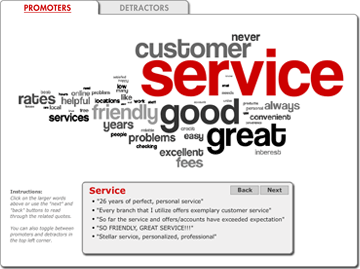
It is often the language customers use to describe how they feel about the service they received that crystallizes the most important issues. In the Bain survey, respondents were asked to describe in their own unprompted words the top-of-mind reason they gave their bank the Net Promoter Score they did. This lets customers—not the survey designers—determine what matters most. The importance respondents (whether promoters, passives or detractors) ascribed to any reason was a function of how frequently it was mentioned. One simple way to visualize this feedback is depicted on the inside covers of the report, where the size of the word is proportionate to how often it was mentioned-promoters' top issues inside the front cover and detractors' inside the back.
Digging deeper, we sorted the thousands of comments we received into 10 categories that were broad, yet distinct. Thus, customers who spoke of their bank's "trustworthiness" had their comments clustered with those of others who mentioned its "size," "reliability" or "stability" in the umbrella category of "brand reputation." We gathered mentions touching on the banks' "friendliness," "problem resolution" skills, and "knowledgeable staff" and several other like attributes into a broader "service" category. (See the methodology appendix for details on the categorization of comments.)
What did the respondents say bank customers really want? "Service" was overwhelmingly the top reason promoters cited for recommending their bank. It was mentioned more than six times more often than "rates and fees" or "branches," which were second and third, respectively. Further underscoring the importance of service, detractors cited poor service delivery as the chief factor influencing the low scores they gave, although "rates and fees" was not far behind.
Respondents' comments confirmed how much rates and fees can enhance or undermine customer loyalty. Promoters who are customers of community banks, credit unions or direct banks were about as likely to mention the service their bank offers as their counterparts who keep their accounts at a national or regional bank. Yet, they were four times more likely to praise their bank's rates and fees. Among detractors, customers at national and regional banks cited poor rates and high fees in their negative comments more than twice as often as other respondents.
The power of service clearly provides the greatest potential to set a bank apart for good or for ill. Of course, banks have worked on service—improvement initiatives for decades, with inconsistent results, at least in terms of clearly demonstrable economic returns. Many banks suffer from what might be called "service-initiative fatigue," a sense that there are too many things to improve to make a difference or that delivering truly differentiated service is too expensive. It is true that systematically striving to deliver exceptional service requires hard work. But it often ends up saving money because it roots out defects that drive up costs from complaints, service calls and re-work. Moreover, delivering service that delights does not necessarily cost very much. For example, our analysis of the verbatims showed that respondents, by a factor of two, described simple "friendliness" is the service feature that is most important for winning their loyalty.
Indeed, loyalty leaders drew the most consistent praise for going above and beyond for their "friendliness," "helpfulness" and "problem resolution." "They are friendly and helpful," said one respondent of her bank. "[There's] never a problem they can't solve." "They consistently exceed expectations," said another. "I love the bank's values, customer service and commitment," said a third. "They make me feel like they really look out for my best interest." "Friendly service" may not be easy to define or deliver, but it is far less expensive than investing in major systems upgrades. Delivering friendly services is inextricably linked to improved employee loyalty, stronger corporate culture and effective training. Getting the connection right can be highly profitable. (We will expand on this connection in Section 5.)
Leading banks demonstrate that winning customer loyalty and advocacy is a big step beyond earning mere satisfaction. Delivering a satisfactory experience requires a company simply to meet customers' basic requirements competently with products that work as promised and by resolving problems as expected. Meriting customer loyalty demands much more. Loyalty leaders differentiate themselves by delivering ordinary services exceptionally well and by their ability to provide exceptional services and product features that the competition cannot match.
Among banks in the NPS survey, only direct banks like USAA, ING, President's Choice Financial and the best of the community banks and credit unions come close to meeting that exacting standard. The scores and the customer comments show that the best-scoring banks do a better job at delivering consistent, friendly service that wins promoters and eliminating the defects-notably high fees and poor rates-that breed detractors. For the direct-bank survey participants, nearly three-quarters identified themselves as promoters and fully three out of five gave their bank a perfect score of 10. The direct banks came by their high promoter scores by reinforcing customer-centered cultures, operating systems and frontline engagement that focused relentlessly on serving account holders well.
Further segmentation of the survey responses clearly showed that nearly all banks could earn greater loyalty from their customers—particularly those who present the greatest economic potential. Grouping the respondent population by age, for example, our analysis found banks are underperforming among their mid-career customers aged 25 to 55 years whose banking and borrowing needs are usually greatest. Customers in the prime age segments of 25 to 35 years and 36 to 55 years gave their banks an NPS of just 11 percent-well below the score that late-career and elderly respondents over age 56 gave. (We also cut the data by respondents' gender and found that, although women were somewhat likelier than men to be promoters, there were otherwise no major differences in their behavior.)
Banks also could do a much better job serving groups that should be their most important targets, namely their wealthiest customers. US respondents from households with investable assets of $1 million or more gave their banks an NPS of just 2 percent. Among national branch network banks, the NPS for customers whose household investable assets top $1 million was -15 percent, nearly twice as bad as that given by customers with assets between $500,000 and $1 million. For regional banks, the NPS of the wealthiest customer segment drops to -5 percent from +5 percent for the next wealthiest customer group. Even the direct banks fall short in meeting the more discriminating needs of affluent customers. The NPS given by the highest-net-worth respondents, at +38 percent, was more than 20 percentage points lower than for the next wealthiest group.
Across the board, the most affluent respondents reported negative experiences with their bank's service, fees and rates in numbers far greater than less-affluent respondents. The lower scores given by wealthier customers may be a reflection of the fact that their banks fail to meet their higher expectations set by their experience with other industries. Airlines and luxury hotels, for example, provide first-class accommodation and personalized concierge services. Private banks and asset management firms that cater to the affluent provide "white glove" attention to high-net-worth clients. Most retail banks, in contrast, have struggled to carve out an equivalent high-end service offering for affluent account holders. However, one bank in our survey, Mexico's Ixe Banco, has developed a service model that differentiates it along this important dimension. Ixe Banco executives make it a responsibility to know the bank's affluent clients by name; track important personal events, like birthdays; and even deliver checks or currency exchange to customers' homes or offices.
The consequences of banks' inability to win more affluent promoters and reduce their number of detractors are striking-and costly. Our analysis of the survey data found that promoters among every wealth segment purchased more products than detractors and that the gap between the average number of products promoters owned relative to detractors widened with income. For example, promoters with household assets below $100,000 owned an average 2.8 products versus 2.3 for detractors. However, promoters whose investable assets exceeded $1 million owned 3.7 products compared with just 2.8 for the detractors with equivalent wealth. By capitalizing on the more sophisticated needs and greater reliance of their well-heeled customers for advice and products that meet them, banks that set out to boost their NPS among the affluent stand to capture many times the premium earnings from this already highly valuable cohort.
Across every wealth segment, affluent promoters showed a greater propensity to give positive referrals to
their bank. Promoters from households with investable wealth below $100,000 said they recommended their bank to friends or relatives an average 3.8 times; the wealthiest promoters gave 4.1 referrals, on average.
Major implications flow from these findings. Customers value good service and they know it when they experience it. For a start, banks need to cultivate an assurance that they offer fair pricing and reasonable fees. But delivering on customers' basic expectation of consistently reliable service is only a precondition for making loyalty possible. Banks need to provide service that goes well beyond the ordinary to reap the truly attractive rewards that come to those that understand, relentlessly pursue and merit the loyalty of the most attractive customer segments.
Unfortunately, too many banks design their value propositions, service delivery processes and customer experiences around an average consumer. Banks that are content to hit the average should not be surprised when they reap mediocre results. The question is: What do banks need to do to excel? We turn to that topic next.
5. What banks can do
The drill is familiar to most bank executives who have ever tried to spur customer-led organic growth. Implement training programs to help customer-facing employees project a "friendlier" image. Check. Develop incentives to increase product cross-selling. Check. Fine-tune processes to eliminate service defects. Check. Launch a rewards campaign to improve retention rates or encourage account holders who refer their friends. Check, check.
What bank hasn't tried each of these approaches-many of them repeatedly? Most yield some short-term gains. But those usually dissipate in the next round of cost-cutting, or when the "gamers" the bank paid to acquire as customers find a better deal elsewhere, or when senior management moves on to new priorities.
It is no coincidence that loyalty leaders are very focused (like the direct banks) or small organizations (like the community banks and credit unions). Their business models allow them to concentrate obsessively on their customers and build their entire operating system around them. Of course, doing this is much harder for large, complicated organizations, and it takes years of sustained effort to achieve lasting results. But it would be a mistake to believe that sheer size is an impenetrable barrier to success. The solution lies in bridging the gap with customers by enabling the big organization to think and act like a nimble small one.
The best practices we have codified from our work with banking loyalty leaders across the globe reveal a clear pattern. Effective loyalty systems enable these companies to get close to their customers and align the entire organization around the mission of earning their loyalty by addressing two related challenges simultaneously. First, senior leaders use the lens of customer input to chart the bank's strategic direction and better allocate resources. Their objective: to profitably meet the most important needs of attractive customer segments in ways that set their bank apart from its competitors. Second, and in parallel, it implants disciplines that channel a steady flow of customer feedback to frontline employees who use it to learn, act and improve every day.
Both top-down strategy setting and bottom-up frontline activation are critical. Do only the first and the business will struggle to translate strategic insights into day-to-day actions. Do only the second and the organization can waste efforts on the wrong priorities. Loyalty leaders integrate the two by building capabilities around six key elements.
1. Measure
The leaders begin by defining what competitive success built on customer loyalty means for their organization and determining how they will measure it. For many banks, Net Promoter Score (NPS) is the tool that underpins their loyalty system by providing a reliable metric for the health of their customer relationships. Central to its appeal is NPS's ability to allow a bank to use the "would you recommend" question to quickly sort its own and its competitors' customers into promoters, passives and detractors and assess its competitive position.
When NPS is used as a benchmark of competitiveness, what matters most is not the bank's absolute score but how it stacks up relative to its direct competitors across relevant product markets and geographies. Thus, a bank that receives a low NPS yet ranks higher with customers than all of its direct competitors is indisputably best in class and likely to gain market share. By slicing the data by customer segment, a bank is able to zero in on how well it is able to serve the most attractive, highest-value customers.
The ability to capture competitive insights in a single, auditable metric makes NPS powerful because it is easy to communicate throughout the organization and it is actionable. It puts customer-focused decision making front and center at all levels, assigns accountability and can be linked to individual target customers. Through the understanding it provides about competitors' relative strengths and weaknesses, it also becomes a cornerstone for determining which customer segments to pursue, where to compete and in what products markets to play. This clarity, flexibility and reliability put NPS (or any other similarly clear, single measure that meets the needs described here) at the heart of a loyalty system based on direct customer feedback that reinforces organization-wide learning and continuous improvement.
2. Value
Loyalty leaders ground the actions they take in the economics of their customer relationships. Identifying their most profitable customers, their finance teams calculate how much a promoter, passive and detractor is worth to the bank's bottom line. They also quantify the additional profit they stand to gain by converting a passive to promoter or reducing their number of detractors. Loyalty economics becomes a central pillar in their decision-making processes and a reference point when undertaking investments. Without this, investments in loyalty seldom last when budgets get tight.
How this works in practice can be seen in the experience of a major North American retail bank. When the bank's marketers set out to use NPS to guide its new-customer recruitment initiatives, their analysis revealed that top-quartile customers accounted for more than 70 percent of total profits. Digging deeper the marketing team developed a demographic profile of these account holders by age, income and the products and services they bought. Based on this template, the team constructed its NPS initiative to focus on potential new customers who shared these prized characteristics. The factors that created promoters or detractors among this segment differed markedly from the factors driving loyalty among other, less attractive segments. An "on average" look at NPS among all customers would have resulted in suboptimal capital allocation.
3. Prioritize
Not content to know only who their promoters and detractors are, loyalty leaders delve deeper to ferret out the root causes that lead customers to hold the opinions they do. They identify these by asking a follow up to the "would you recommend" question, inviting respondents to briefly describe in their own words the chief reason they gave the score they did. Gathering and sorting their answers, they then prioritize the "moments of truth" that matter most and formalize an ongoing process for addressing the issues they uncover.
At a leading regional bank, for example, customer verbatims revealed that a significant number of detractors were annoyed that it took the bank anywhere from three to five business days to provide a replacement debit card. Tasking an operations team to work on the problem, the team discovered that service delays at this important touchpoint were aggravating some of the bank's most active and profitable customers disproportionately. Recognizing that it risked jeopardizing its relations with this key segment, the bank quickened its card-replacement and shipment processes to put a new card in a customer's wallet within 24 hours. Seeing positive results from the new policy, the bank made the one-day replacement guarantee a part of its marketing pitch to attract new customers. Its NPS and new-account recruitment both climbed.
4. Close the loop
Identifying those touchpoints where contacts have the biggest influence on shaping the customer experience and making them a priority is crucial, but it is only an important first step. Loyalty leaders go further by creating closed-loop learning processes that channel a regular flow of feedback customers provide to the frontline employees and their supervisors for direct follow-up. The two-way exchanges between customers willing to discuss their recent service experience and the employees who served them provide opportunities for employees to learn directly from the customer herself how they can refine their service skills. Equally important, the follow-up dialogue assures customers that someone is listening to what they have to say and is prepared to take steps to rectify a problem. Effective closed-loop feedback processes put protocols in place for employees to rapidly escalate issues customers raise to other parts of the organization where remedial action, a process change or a policy adjustment may be required.
Brainstorming among members of a frontline work unit who meet regularly to review the customer feedback they receive can be a source of simple solutions that have a significant impact on improving the customer experience. Sometimes what they learn is surprisingly basic and simple to implement. For example, a local manager of a major bank discovered in the feedback that several customers found it a hassle to visit the branch because it was hard to maneuver their children's strollers through the office layout. They did not want to leave their young children unattended near the front entrance but were frustrated by the obstacles on the path to teller windows, ATMs or service desks. The manager relocated some of the obvious barriers that hindered movement in his branch and recommended that the bank make minor layout changes that ultimately eliminated the annoyance. Without the direct customer feedback, the bank would have been much slower to recognize the problem—or even failed to recognize that it had one.
5. Engage
A loyalty system cannot be imposed from the top down but instead is a set of attitudes and behaviors deeply embedded in the metabolism of the organization. It is central to the job of all employees to strive to make promoters of their customers. Engaging employees in this mission requires the organization to instill loyalty disciplines by doing four things: First, develop training programs to introduce and reinforce customer loyalty. Employees need to understand what service skills they need to bring to the job to earn a top score of 10. Second, managers and supervisors need to provide ongoing, real-time feedback and coaching on their customer-service skills. Verbatims on individual employee performance gathered from NPS surveys become indispensable tools for mentoring and guides for improvement. Third, employee engagement needs to be built in a work environment grounded in candor and trust. The organization needs to create forums and communications channels that allow employees' voices to be heard. Many banks that have adopted NPS to measure customer loyalty also use internal NPS surveys to assess whether employees would recommend their bank as a place to work. Finally, employees need to be inspired to continue to lift their performance. Positive customer feedback and testimonials from promoters provide countless stories to celebrate and share throughout the organization.
6. Act
Net Promoter Scores and verbatim feedback provide the raw material that feed a loyalty system. But it is the capabilities of the organization at every level to absorb what customers are saying and convert insights into learning that result in action and improvement that achieves true organic growth. Banks that excel at these develop cross-functional teams to drive initiatives and facilitate the sharing of best practices. They embed active learning from customers and continuous improvement into the daily business rhythms of the organization. And they develop processes to ensure follow-through.
The experience of the credit-card unit of a major North American bank illustrates how the spirit of learning, acting and improving takes root in a concrete way. Customer feedback from cardholders revealed very negative feedback around the process of collections calls for late payments. On the surface, this might not seem like an area to worry about loyalty; after all, these are customers who are delinquent and may ultimately lead to write-offs. The first priority, the unit's managers thought, should be the speedy collection of unpaid balances. But when they looked deeper into the profile of the customers who were on the receiving end of these calls, they discovered that a significant proportion were cardholders with high credit limits and included many in the bank's most profitable segment.
As the team dug deeper into the data, they also found that agents with the best collection rates also had the highest NPS. Speaking to the agents and observing them as they worked, they discovered that these employees were more effective than their peers in conveying empathy and building trust in a way that made customers more willing to pay. The team overhauled call protocols, rewrote scripts for how the calls could be conducted in a more positive manner and retrained agents to take a friendlier and more sympathetic tone. When the new procedures were in place, the bank's follow-up NPS surveys confirmed that customers who were treated well paid off their balances faster and had much higher loyalty scores. The benefits did not end there. The encouragement to treat customers well and the improved results they saw from their efforts also lifted the morale and loyalty of the collectors, significantly reducing staff turnover.
Each of these six elements can help advance a company's customer focus, but their real power multiplies when they are brought together into an integrated loyalty system. Banks that adopt only the NPS metric but fail to embrace closed-loop feedback, prioritize the right touchpoints, or develop the cross-functional teaming to learn, adapt and improve miss out on its compounding benefits. Integrating the six elements to achieve truly transformational change requires organizational infrastructure, information technology support and appropriate tools for reporting and tracking the closed-loop feedback process. A true loyalty system can be built only by taking a holistic approach. Banks that adopt just the NPS measurement tool without embracing all of the disciplines that make the system robust capture only a small fraction of the gains.
Perhaps the most important glue of all is effective leadership and communications. Senior executives who communicate the loyalty program's goals and progress internally and externally set the tone and example for its success. They demonstrate the organization's commitment to increasing the proportion of promoters by creating a customer leadership team to advance its objectives. They lead by example, participating directly in the customer feedback process and even personally fielding calls with promoters and detractors. They raise the goal of linking organic growth and customer loyalty by developing a loyalty "report card" and elevating its importance to that of hitting financial targets. Finally, they and their boards make the achievement of organic customer-led growth an integral part of their compensation. Accountability for building healthy, enduring customer relationships is every employee's mission, and that starts at the very top.
Appendix: Methodology
Bain & Company partnered with e-Rewards, the online global market research organization, to survey consumer panels in the United States, Canada and Mexico to gauge their loyalty to their principal bank and the underlying reasons they hold the views they do. Conducted in June and July 2010, the survey polled 89,025 customers of 90 national branch banks, regional banks, private banks and direct banks plus hundreds of community banks and credit unions in the United States, Canada and Mexico. We included in the individual bank analysis only those banks for which we received at least 170 valid responses. We grouped all community banks and credit unions together and evaluated the responses we received from their customers as a single business-model category.
The respondent sample: To reflect that banking market and ensure robust, statistically valid results, the
respondent sample included somewhat higher proportions of middle-aged and affluent households than the overall US population. By age, people between 36 and 55 years make up 22 percent of the total population but account for 43 percent of all respondents. By contrast, households headed by people in the age range 18 to 25 years are 13 percent of the population as a whole but 8 percent of the survey sample. Likewise, by income, households earning less than $49,000 annually comprise 55 percent of the total population but only 26 percent of our sample. Those earning more than $100,000 a year are 14 percent of the population but 30 percent of the sample. Each region of the US is represented in the sample in approximately the same proportion as its population.
Survey questions: The survey questionnaire consisted of 11 main questions. Once respondents identified their primary bank, they were asked the following three questions to assess their feelings of loyalty to that institution:
- On a scale of zero to 10, where zero represents not at all likely and 10 extremely likely, how likely are you to recommend your primary bank to a friend or relative?
- Tell us why you gave your primary bank that score.
- In the last year, how many times did you recommend your primary bank to a friend or relative?
Respondents were then asked to identify the major reasons they initially chose to open an account with their primary bank and which of the bank's products they have. The remaining five questions elicited demographic profile information on age, gender, household income, investable assets and region of residence.
Analysis of respondent comments: For each of the four bank categories whose customers we surveyed, we randomly sampled nearly 3,000 open-ended verbatim comments respondents offered as the chief reasons they gave their banks the score they did. We coded the comments into 66 categories. We then grouped related categories into the 10 meta-categories as listed below:
- ATMs: General ATM, location/quantity; ease of use; features/services offered; safety/security; international availability
- Banking processes: Proactive communication; account security/ID theft; secure systems; timely statements/bills; clear and accurate communications; serious error resolution
- Branches: General branch; quantity of locations; hours of operation; cleanliness/atmosphere; wait time in line
- Brand reputation: General reputation; trustworthy; size/stability; reliable
- Emotional: General emotional; sense of loyalty; there when needed; better than other providers
- Fees: General fees; ATM; CD; current/checking account; money market account; savings account; overdraft; wire transfer; international; online; added/changed/ hidden/transparent; credit cards
- Online banking: General online; bill pay; easy/user friendly; features/services offered
- Product: General product; CD; checking; investing; mobile banking; mortgage; savings; loan/line of credit; rewards; credit cards
- Rates: General rates; mortgage; CD; deposit; line of credit; loan
- Service: General service; friendliness; helpfulness; knowledgeable; feel valued; understand my needs; problem resolution; speed
State to region mapping: Banks in the 50 US states and District of Columbia were assigned to the following four regions:
- Midwest: IA, IL, IN, KS, MI, MN, MO, ND, NE, OH, SD, WI
- Northeast: CT, MA, ME, NH, NJ, NY, PA, RI, VT
- South: AL, AR, DC, DE, FL, GA, KY, LA, MD, MS, NC, OK, SC, TN, TX, VA, WV
- West: AK, AZ, CA, CO, HI, ID, MT, NM, NV, OR, UT, WA, WY
Statistical significance of findings: The results of our data analysis are robust both for the measurement of bank NPS by region and for respondent NPS for each demographic category. The NPS measured for each bank included in the regional rankings is statistically significant to an 80 percent confidence level, with a two-tailed test of the confidence interval ranging from plus or minus 1.5 percent (n > or = 4,500) to plus or minus 7.5 percent (n = 170).
For the analysis of NPS by demographic subcategories of respondents' age, income, gender and investable assets, we again aimed for results that would be statistically significant at the 80 percent confidence level. Given the large size of our overall sample (n =74,840 in the US) and its overweighting in some age, income and affluence categories, the confidence interval for most demographic subgroups is plus or minus 0.4 percent. For the numerically smallest subcategory of respondents (those having investable assets greater than $1 million), the number in our survey sample was 2,600, yielding a confidence interval of plus or minus 2.1 percent that the NPS score they provided would be significant at the 80 percent level.
Key contacts in Bain's Global Financial Services practice
Global: Alan Colberg
Americas: Andrew Schwedel
Europe, Middle East and Africa: Paolo Bordogna
Asia-Pacific: Edmund Lin; Gary Turner
Acknowledgments
This report was prepared by Gerard du Toit, leader of Bain's Banking practice in the Americas, Beth Johnson, leader of Bain's Customer Strategy & Marketing practice in the Americas; and a team lead by Maureen Burns, senior manager in the Americas Financial Services practice, and Christy deGooyer, Financial Services practice area manager.
The authors thank Aaron Cheris, Rob Markey, Fred Reichheld, Antonio Rodrigues and Diego Santamaria for their contributions and Lou Richman for his editorial support.
We are grateful to e-Rewards for their valuable assistance conducting the NPS customer survey and their responsiveness to our special requests.
Published in October 2010